In the eight or so years I've been at Think, one of the things that's always been quite noticeable is how much of the business has existed as unwritten knowledge. That's probably fairly normal for a creative agency that's grown organically over a long period of time. Somebody learns how a particular type of project works, another person develops a better way of presenting something to a client, somebody else knows the little production detail that saves everyone an hour, and gradually you build up a huge amount of knowledge without ever really deciding where that knowledge lives.
For a long time, that wasn't necessarily a problem. The business was smaller, people had been working together for years and a lot of the process could be picked up simply by being around it. Think has also never stood still, so the way we worked was constantly evolving anyway. By the time you considered documenting something, there was a reasonable chance we'd already found a slightly better way of doing it.
The challenge became much more obvious when the team and the projects started growing. When I took over the day-to-day running of Think, we were bringing new people into the business and I started to notice how often we were expecting somebody to understand something we'd never actually explained. Onboarding took longer because so much context had to be passed on verbally, different people had slightly different interpretations of how things should happen, and small inconsistencies could gradually start affecting the wider culture.
It wasn't anybody doing anything particularly wrong. We simply had years of assumptions that had never been written down. So it was the simple solution to start writing them down.
Turning Unwritten Knowledge Into Something Useful
The original intention wasn't to create a huge corporate manual or give everybody a day-to-day instruction book telling them exactly how to do their jobs. That would be particularly pointless in a creative business, where a large part of the value comes from people thinking differently, bringing their own experience and challenging the obvious solution.
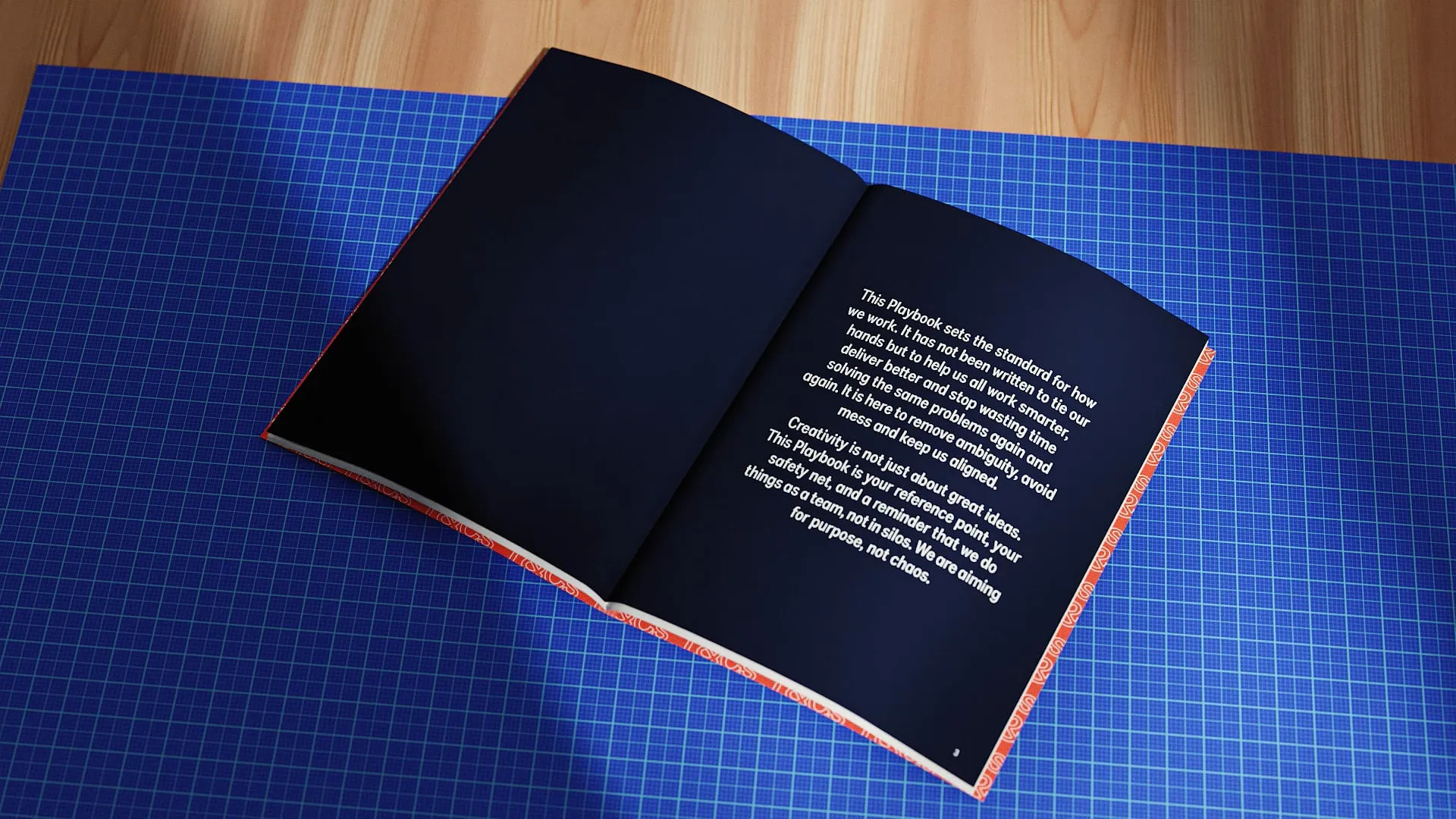
I wanted to create a shared understanding of how we approach the work. What started relatively small gradually turned into The Thinking & Creative Playbook, a 100-plus-page document covering everything from how we brief projects, communicate with clients and review creative work through to meetings, workload, file management, pricing, AI, learning, accountability and the standards we expect from one another. The opening explains it pretty simply: the Playbook isn't there to tie people's hands, but to remove ambiguity, stop us solving the same problems repeatedly and help everybody work together more effectively.
Most of what went into it wasn't new. A lot of it was already in my head, in other people's heads or buried in little habits the agency had developed over years. Writing it simply forced us to articulate those things clearly enough that somebody joining the business tomorrow wouldn't need to spend a year working them out for themselves.
And once I started, it kept growing. You document what should happen when a project starts and immediately realise you should probably explain what happens before something is sent to the client. That leads into quality control, which leads into accountability, which leads into communication, which then makes you think about how people manage workload, learn new skills and pass what they've discovered onto everybody else. Eventually, the small guide becomes a book.
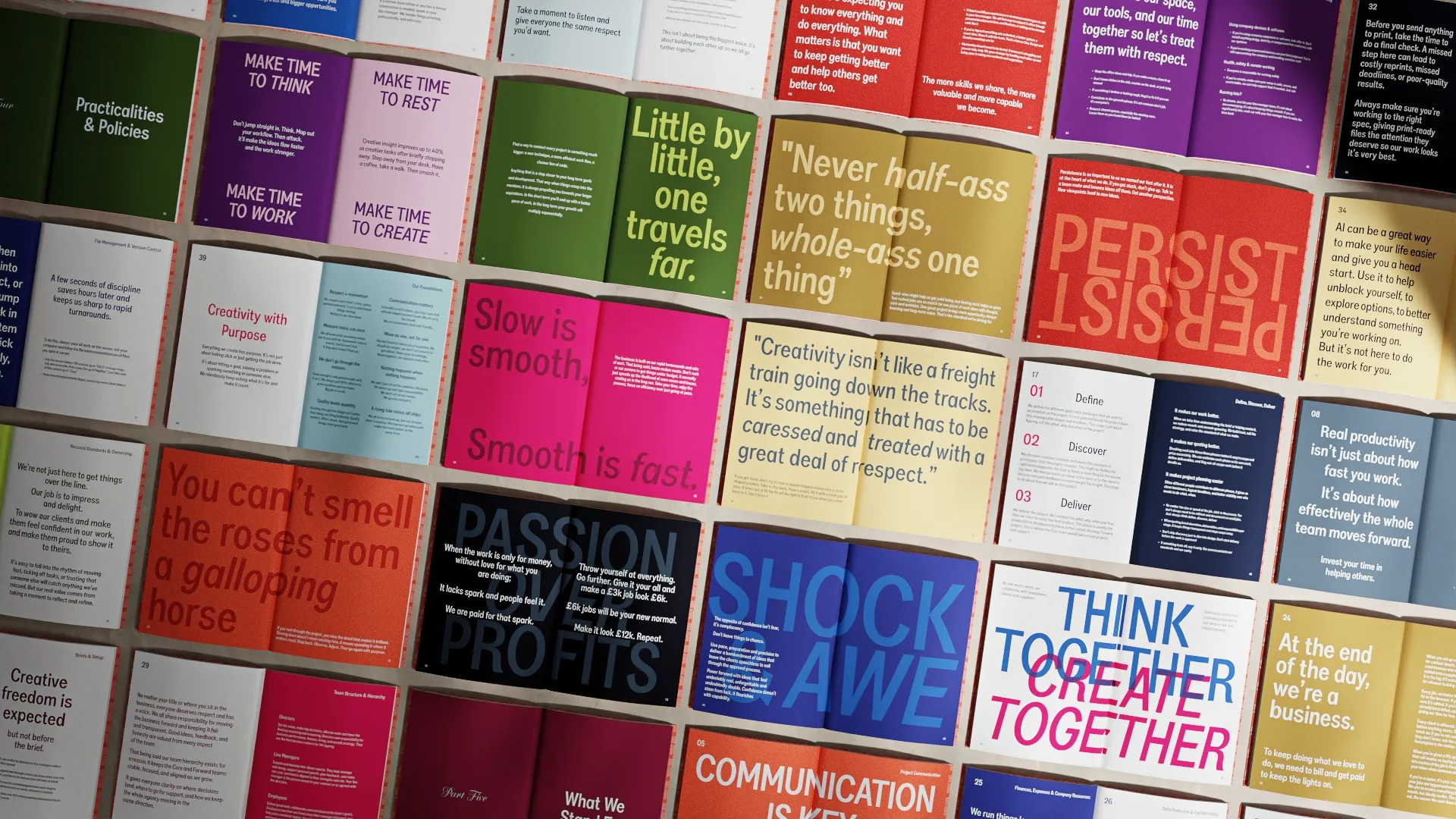
Culture Isn't Just The Nice Stuff
I think "company culture" can sometimes get reduced to the more visible things. Team lunches, nice offices, flexible working, socials and whatever else happens to appear in the recruitment section of a website. Those things can absolutely matter, but I've come to think culture is also the accumulation of hundreds of smaller expectations around how people behave when they're actually doing the work.
What happens when somebody makes a mistake? How early do you ask for help? Do you keep useful knowledge to yourself or share it? Do people feel comfortable challenging an idea? Does somebody check a piece of work before it leaves the studio? What happens when another member of the team is struggling? Those little behaviours have a much greater influence on the experience of working somewhere than a values poster on the wall.
That's why the Playbook deliberately goes into those areas. It talks about reliability, honesty, teamwork and mentorship, but also about sharing useful shortcuts, helping somebody learn something you already know and connecting everyday projects with longer-term development. The idea was to encourage practicality and ownership of everyone’s development. If somebody learns a better method or figures something out, share it, because the more skills we share across the team, the more capable the whole agency becomes.
Those are the kinds of lessons people within Think have learnt over years of working on projects, making mistakes, solving problems and figuring out better ways of doing things. Putting them into the Playbook means a newer member of the team doesn't necessarily need to learn every one of those lessons the hard way.
Structure Should Give People More Freedom, Not Less
The bit I was particularly conscious of was making sure this didn't become process for the sake of process. We're called Think Creative for a reason. I don't want somebody approaching every job in a completely linear way because page 47 of a manual told them exactly what button to press next. The point is almost the opposite. If the basic expectations are understood, people should have more confidence to concentrate on solving the interesting problem.
We didn't want to produce a beautiful book, hand everybody a copy and then allow it to disappear into a drawer either. Every member of the team has their own printed copy, but we're also gradually bringing pieces of the thinking into the systems we use every day. Small reminders and principles can appear through our planning and time-logging tools, so the culture becomes part of how people work rather than something they're expected to remember from an. Otherwise we've simply replaced unwritten assumptions with outdated written ones.
What it became was a way of capturing years of accumulated knowledge, setting out the culture we want to protect and giving the next group of people joining Think a better starting point than simply having to figure it all out themselves. It was also a really great exercise to understand and improve what makes your company tick.